179 Prom. du Portage, 4th floor, Gatineau, QC J8X 4B7, Canada



23 Apr
Getting a Canada visa refusal can be frustrating and confusing. Many applicants receive a rejection letter with vague reasons that don’t fully explain what went wrong.
The reality is that visa refusals are rarely random. There are underlying factors that immigration authorities evaluate carefully—but these are not always clearly communicated.
In this blog, we uncover three hard truths behind Canada visa refusals and how you can avoid them with the right approach and expert guidance.
Canada follows a strict and structured immigration system. Every application is assessed based on eligibility, documentation, and credibility.
A refusal does not always mean you are ineligible—it often means your application did not clearly prove your case.
Understanding the real reasons behind refusals is the first step toward improving your chances.
One of the most common reasons for refusal is the lack of clarity in your purpose and intent.
Visa officers evaluate whether:
If your application fails to clearly communicate your intent, it raises doubts.
Even if you are eligible, weak presentation of your case can lead to refusal. Your application must clearly tell a logical and convincing story.
Many applicants believe submitting documents is enough—but quality matters more than quantity.
Common documentation issues include:
Visa officers look for clarity, consistency, and credibility in every document.
Your documents should not just exist—they should support your case effectively and eliminate doubts.
A major mistake applicants make is applying without a clear plan.
This includes:
Immigration is not just a process—it requires a strategic approach.
Without a proper strategy, even strong profiles can face rejection. A well-planned application increases your chances significantly.
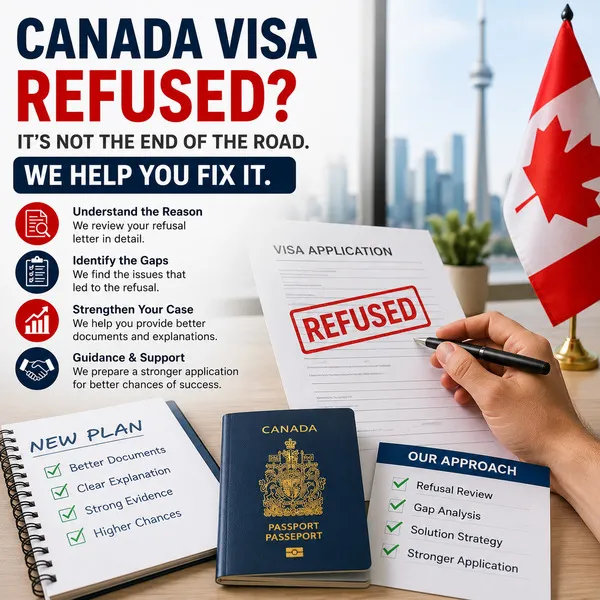
A refusal is not the end of your journey. It is an opportunity to improve your application.
Here’s what you should focus on:
A corrected and stronger reapplication can lead to success.
Applying without expert support often leads to avoidable mistakes.
A licensed immigration consultant helps:
This significantly improves your chances of approval.
Charterlane Immigration focuses on transparency, strategy, and accuracy in every application.
RCIC License Details:
With licensed expertise, every application is handled according to Canadian immigration laws and best practices.
Canada visa refusals often come down to clarity, documentation, and strategy. Understanding these hidden factors can help you avoid mistakes and improve your chances of success.
A well-prepared application, supported by the right guidance, can make all the difference.
Charterlane Immigration ensures that your application is not just submitted—but presented in the strongest possible way.
Even if you meet eligibility criteria, your application may be refused if it lacks clarity, strong documentation, or proper presentation.
Yes, you can reapply after addressing the reasons for refusal and improving your application.
Charterlane Immigration analyzes your refusal reasons, identifies gaps, and helps you prepare a stronger reapplication strategy.
Yes, previous refusals can impact future applications if the same mistakes are repeated.
Reapplying without correcting previous errors is the most common mistake that leads to repeated refusals.